ReallyBadTalk

  • Subscribe to our RSS feed.
  • Twitter
  • StumbleUpon
  • Reddit
  • Facebook
  • Digg
Showing posts with label history. Show all posts

Friday, 13 September 2013

Here Be Monsters

Posted on 23:46 by Unknown
At Thoul's Paradise, perdustin posted a copy of a beautiful map of Iceland c. 1590, which includes a bestiary of sea monsters believed to infest the waters of the North Atlantic.

Two things jump out at me. First, the map includes features such as ice and trees, the latter described as windthrow from Norway. I like encounter tables which include features like this, both for local color which brings life to the setting and to provide the players with a potential resource to tap for their own schemes.

Second, it's a reminder of how superstitious the late Renaissance and Early Modern world remains. This map is dated just 36 years before the present year of my campaign. We haven't yet reached the cusp of the Enlightenment, and monsters and witchcraft are still accepted as real by many in the game-world. Stories of mythical beasts, rumors of dark arts - these, too, bring the setting to life, particularly when myths and mysteries have a basis in fact which can appear as well, as with the giant squid in Michael Crichton's Pirate Latitudes.
Read More
Posted in cartography, history, Iceland, perdustin, Thoul's Paradise | No comments

Wednesday, 4 September 2013

Retcon

Posted on 23:36 by Unknown
I received my copy of Osprey Publishing's French Musketeer 1622-1775 before I went on vacation. I don't want to get into a review of the book; I suck as a reviewer and I don't enjoy writing them. I've enjoyed many of René Chartrand other books for Osprey, but I don't feel this was his best effort. It's not an easy subject, with so much myth entwined with a paucity of historical records, particularly of the early years of the King's Musketeers. Still, I noticed a number of contradictions of information gleaned from other, seemingly reliable sources as well as a couple of confirmed errors. Overall, for me the book lacks the depth and breadth of other titles in the Warrior series, such as Matchlock Musketeer and Ironsides.

That said, it contains much that is worthwhile for anyone interested in the period and for gamers who want to present a more historically rich depiction of the King's Musketeers in their swashbuckling campaign. Frex, I worked in the duty of a King's Musketeer to be the first soldier to receive the king's orders in the morning and the last to receive them at night for our newly-promoted ensign when we played last weekend.

Unfortunately for me, my depiction of the Musketeers so far also took a couple of hits.

I started working in earnest on Le Ballet de l'Acier, my Flashing Blades campaign, about four-and-a-half years ago. I've consulted more books and websites than I can remember. My personal library of books on 17th century Europe is somewhere around a hundred volumes at this point, and that doesn't include another score read while hunkered down in library stacks at local universities. The number of websites I've visited in that time, in English and in French, easily doubles that number. Even with this vast collection of history at my fingertips, the reality is that none one of these sources truly contains all of the information for which I searched. My knowledge of the period was assembled piecemeal, from many different narratives, some popular history, some academic history, some fictional.

In some cases, I deliberately put aside history. Frex, Louis XIII didn't name himself captain of the King's Musketeers until 1627, as Mon Chartrand notes in his book, but I elected to make him captain, and the commanding officer captain-lieutenant, from the units founding in 1622 instead. In other instances, I allowed the fictional history of cape-and-sword authors, most notably Alexandre Dumas, to override the historical narrative; thus, fictional versions of d'Artagnan, Tréville, et al. replace their historical counterparts as they did in The Three Musketeers. This is one of the reasons I warn visitors to my campaign wiki at Obsidian Portal that the site is alt-history.

Of the places where my campaign and that tiny sliver of the historical record with which I'm personally familiar diverge, up to this point nothing that's taken place in the campaign itself required a specific retcon; either the action conformed to the known history or to my campaign specific alt-history. That is, until I read about the Garde du dedans du Louvre.

The maison militaire - the military units of the royal household - were divided into the Garde du dedans du Louvre, who stood guard over the king's person inside royal palaces and residences, and the Garde du dehors du Louvre, who stood watch outside of those same residences. The Garde du dedans du Louvre consisted of the Gardes du Corps, the Cent-Suisses, the Gardes de la Porte, and some constabulary foot soldiers armed with polearms. The King's Musketeers were assigned to the Garde du dehors du Louvre.

This directly contradicted information I presented to the players a couple of years back, when the campaign first got rolling; the King's Musketeers were assigned to the interior of the Louvre, while other units were posted to the exterior. It actually played a role in the actions, as the characters sought to smuggle the duchesse de Chevreuse and a wounded Lord Holland into the royal palace.

So, I can completely ignore a trivial historical fact, or I can attempt some sort of retcon to bring the events of the campaign in line with newly-learned period details. The fact that this distinction between guards serving on the inside versus the outside of a royal palace already came up in actual play should tell you that this is the kind of detail I appreciate as a referee, for situations and challenges it creates for the players and their characters. I'm loathe to toss out such a historical tidbit. This means I can choose to assign my earlier explanation to the campaign's alt-history - of course the King's Musketeers serve in the Garde du dedans du Louvre! - or I can decide it was a special situation, perhaps, or that the Musketeers were assigned to the Garde du dehors du Louvre after the events of the campaign took place, say in the year that the adventurers were abroad following their exile from Paris.

I haven't decided which way I want to go as yet; the adventurers just returned to court, and while I'm sure this is likely to come up again in actual play, it's one of those things I can kick down the road a bit, as I have options on how I can handle it should it crop up as I anticipate.

Over the years, I've heard gamers express the opinion that they wouldn't be willing to run historical roleplaying games for fear of getting something 'wrong.' The fact is, I get things 'wrong' all the time, sometimes in broad strokes, sometimes in niggling little bits like whether the King's Musketeers stood guard inside or outside the Louvre. While I firmly believe there's no substitute for putting in the research when preparing and running a historical roleplaying game campaign, being too afraid to risk making a mistake should never be an excuse to avoid running historical campaigns, nor is it likely to be a showstopper unless you let it become one.
Read More
Posted in alt history, history, Le Ballet de l'Acier, Osprey Publishing | No comments

Thursday, 25 July 2013

An Unusual DVR Alert

Posted on 23:46 by Unknown
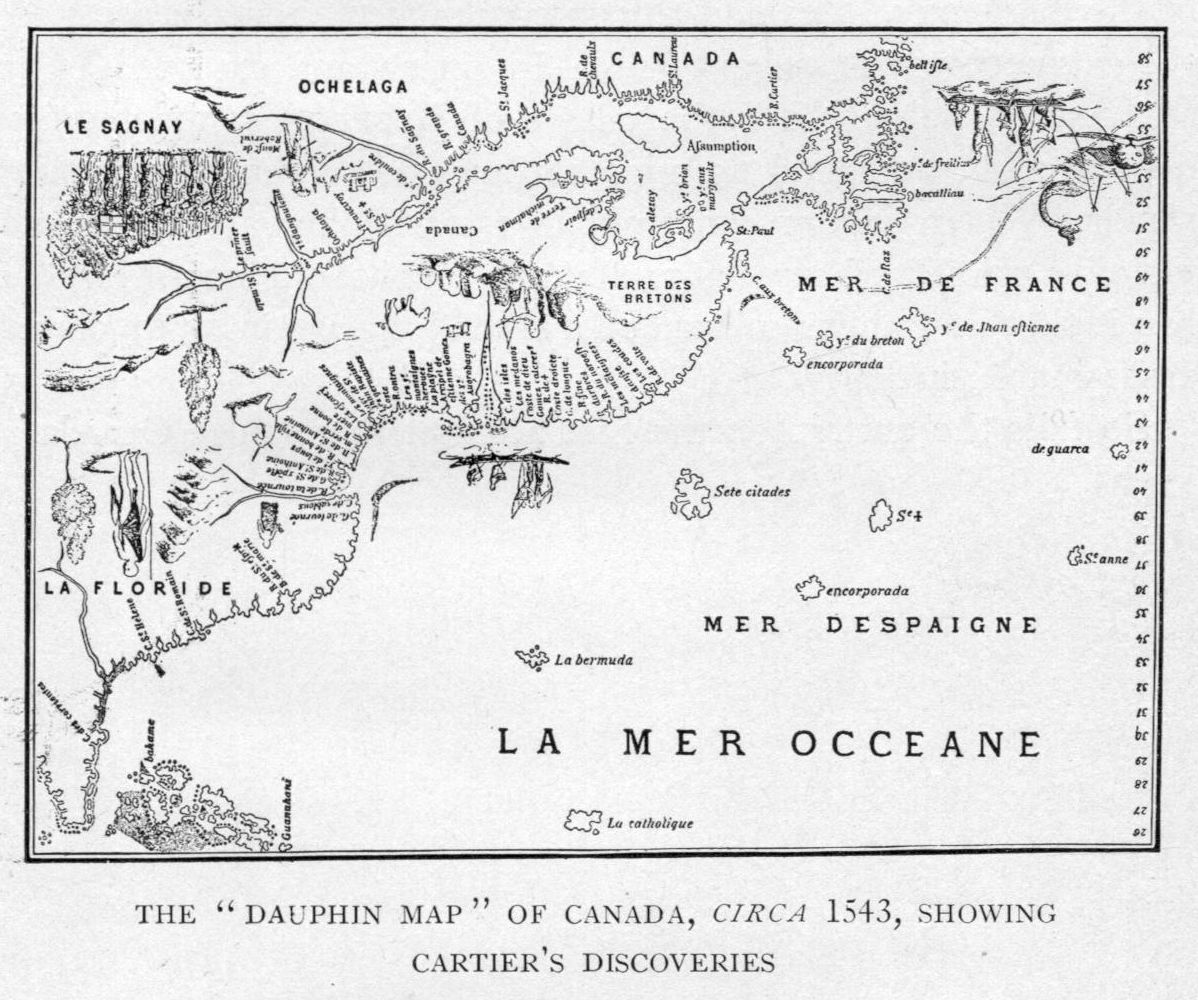
On Saturday, 27 July, TCM will show Kingdom of Saguenay, a short documentary from 1964 about the Saguenay region of eastern Canada.

Now, that's not the usual sort of movie I recommend, but there's a very interesting bit of history here. The modern region known as the 'Kingdom of Saguenay' in fact goes back to the exploration of New France by Jacques Cartier in the sixteenth century. A post at the blog The XIVth Century explains it thus.
He searched the area for five months, sailing completely around the Gulf of St. Lawrence, but he found no road to the wealth of the East. When he sailed back to France he took with him Taignoagny and Domagaya, sons of Donnaconna, a Huron Indian chief. They told Francis I a story about a kingdom called Saguenay, a country where yellow metal could be found practically everywhere.

It was located far up a mighty river which flowed straight down from the north and joined an even greater one where Hochelaga, a city of hundreds of wigwams, stood on an island. The people of this mysterious kingdom, according to the Huron tale, dressed themselves in cloth like that of white men, wore ropes of gold around their necks, and had plenty of precious stones.
Rumors of this city of gold in the forests of the north fueled the fantasies of trappers and explorers for generations, but the reported kingdom was never found. The place name lives on, however.

Tales of the kingdom of Saguenay continue to exist in my campaign, possibly spurring adventurers to journey to New France, so I'm looking forward to the short film to get a look at the countryside.

On the tangent of movies about New France, I highly recommend Black Robe. Find it if you can.
Read More
Posted in history, Kingdom of Saguenay, New France, TCM, video | No comments

Monday, 15 July 2013

On the Buccaneer's Nightstand

Posted on 00:34 by Unknown
I have a hard time reading one book at a time. In fact, it's not uncommon for me to bounce back and forth between three or four books at once, so my nightstand tends to be a bit crowded. Right now there are just two books there - at least for the moment.

The first is Warrior Pursuits: Noble Culture and Civil Conflict in Early Modern France by Brian Sandberg, assistant professor of history at Northern Illinois University. Focusing on the first quarter of the 17th century, when the southwest of France was riven by confessional conflicts between Catholics and Huguenots as well as secular strife between noble clienteles, the book examines the sword nobility - the warrior elite - in Languedoc and Guyenne. The presentation is very thorough, describing in accessible detail how families participated in clienteles, how they gained ranks and offices, how they managed their finances, and so on.

What I particularly enjoy about this book - and about regional history generally - is that Dr Sandberg uses case studies from different families to illustrate broader themes. Sharon Kettering is another writer who does the same in her books on Early Modern France, and I've drawn deeply from her work in creating characters and situations for my campaign; Dr Sandberg's book provides me with a wealth of similar details, in a part of my campaign world which is likely to see considerable attention from the player characters in the near future. It's also a very good nuts-and-bolts look at history behind the military, bureaucratic, and noble careers in Flashing Blades. The prose is accessible and a pleasure to read.

The second is David Parrott's The Business of War: Military Enterprise and Military Revolution in Early Modern Europe. Dr Parrott is also the author of Richelieu's Army: War, Government and Society in France, 1624-1642, and in The Business of War, he turns his focus from France in the Thirty Years War to private military enterprise over the 16th and 17th centuries. As historiography, it takes a new look at the 'military revolution' of the 17th century, arguing that rather than the end of military entrepreneurship, the period saw a resurgence of private military enterprise. The book provides a comprehensive look at how armies were raised and kept in the field.

Some time ago I wrote a first draft of house rules for my Flashing Blades campaign, using a variety of sources - including Dr Parrot's earlier book - and its interesting to re-examine those rules in light of this exhaustive treatment of the subject.

And yeah, this is the stuff I read for fun.
Read More
Posted in history, The Business of War, Warrior Pursuits | No comments

Thursday, 6 June 2013

Dr Rotwang Is My Co-Pilot

Posted on 22:09 by Unknown
"A New Wave song from a Spanish children's educational TV show, from the Movida Madrileña period...about the fall and influence of the Spanish Empire."

¿Por qué no me entero de esta banda antes?
Read More
Posted in Dr Rotwang, history, I Waste the Buddha With My Crossbow, Los Nikis, music | No comments

Thursday, 9 May 2013

Osprey Publishing: French Musketeer 1622-1775

Posted on 16:17 by Unknown
O, Osprey Publishing, how do I love thee? Coming this July, to Osprey's Warrior line, is French Musketeer 1622-1775.
The works of French novelist Alexandre Dumas have been reproduced time and again on stage and screen. Based on a genuine memoir by an officer named D’Artagnan, Dumas published The Three Musketeers. The King’s Musketeers were formed in 1622 and were populated by young men of noble birth, but often of poorer means. The Musketeers served as a form of military academy, which enabled these men to qualify for commission into the regular army, but the academy was not just a schoolroom - the Musketeers served in all major battles and campaigns of the period; their reputation for bravery was well deserved. This title explores the history behind the legends created by Dumas. Drawing on historical and fascinating accounts the truth of this most colourful and flamboyant of units is revealed.
I'm s huge fan of Osprey Publishing, with something like a hundred titles in my book collection. Though focused on militaria, the slim books are also social histories, with a wealth of period detail; this is particularly true of the Warrior series, which go into greater depth than the more broadly-focused Man-at-Arms books.

Looks like I'll have to read Matchlock Musketeer again a few times, to tide me over 'til July.
Read More
Posted in history, musketeer, Osprey Publishing | No comments

Tuesday, 18 September 2012

Write Like a Pirate Day

Posted on 00:35 by Unknown
T'morrow vve celebrayte thayt Moft Ancient and Revyr'd reval, Talke Lyke a Pyrate Day, butt todaye lett uf tayke a mom. too contemplayt ye manner, ftyl, &c bye whych ye moft lern'd Pyratef expreff thymfelfs bye vvaye of ye VVryttin VVerd.

Fome goode advife for thows moft Intrepyd Ryfereef who lycke to creayte propf fuch af lettyrf or othr. fimylr Documyntf af handowts for thyr playerf.

Qvod erat demonftrandum.
Read More
Posted in history, pirate | No comments

Monday, 27 August 2012

Snapping the Suspenders of Disbelief

Posted on 00:56 by Unknown
My son and daughter are playing Mario Kart on the Wii. The race track for this particular race is in orbit around the Earth. Suddenly my daughter pipes up, "How come they aren't wearing space helmets? If they're in space they need helmets to breathe."

Combustion engine vehicles racing on a track floating in the deep cold and searing radiation of space? No problem. No helmets? Boggle.

The threshold beyond which our willing suspension of disbelief is exceeded varies from person to person, but as BryanMD argues at IntWisCha, "reality playing games" facilitate immersion in actual play.

Strange as it may seem, the more a story, even one that takes place outside reality, is grounded in empirical data and supported by accepted facts, the faster we'll fall into it. A story's ability to mirror the reality we've already accepted is directly proportionate to our willingness to immerse ourselves in it. You can call it believability, or connection, or familiarity, but the bottom line is getting the audience to buy into the events and emotions that are woven into the tale you tell. . . . The more 'real' one can make their story seem, the more investment others will make into it. That mutual connection seems well worth a few laps around the internet.
I've written about using both an 'Appendix N' of source literature and historical research to facilitate that suspension of disbelief. A shared understanding of fictional tropes tapped to build a game-world may contribute to verisimilitude as much as its relationship to the real world.

One of the objections from gamers I read when the subject comes up is that concerns about verisimilitude may add to the referee's burden of preparation in exchange for very little actual play return. BryanMD disagrees, citing the example of James Cameron, at the suggestion of astrophysicist Neal DeGrasse Tyson, changing a starfield in Titanic to correspond to the actual stars visible from the ship at the time of the scene.

When I hear stories like those above, my instincts scream "NERD!" at the top of their psychological lungs. To hold a fictional film to such a rigid empirical standard seems dishonest, and carries the potential to damage one's enjoyment of the experience. Why would anyone inflict this intense scientific scrutiny on a leisure past time? These questions burn in my brain; and then I'm reminded of my own factoid fixation when it comes to RPGs.

Did it really matter in my fan fiction that the constellations my Half-elf Ranger was said to be looking at could actually be viewed from his geographical location on Earth? . . . Was it so important to discover which heavy metal, readily available in the late 19th century, had the highest density and therefore the highest relative weight by volume for use in a potion? . . . Can the need really exist to research the descendants of a dead Puritan preacher to find out if any of them actually ended up in England, or check Google Maps to find out if the London church my character attends is within walking distance of her family home near Picadilly Circus? . . . There are a myriad of other examples I could give, but all of them follow the same formula: "Do I really need to know ________ in order to have fun playing __________?" Curiously, all of them have the same conclusion: "Who cares? I looked it up anyway."
A few days ago I found myself reading about the battle of Alcácer Quibir as background for a Portuguese nobleman in Spanish service, an npc who, if he is spared in the course of actual play, may become an important figure in the Portuguese Restoration in 1641.

That's about fifteen in-game years in the future in our campaign, by the way.

It's really not hard to look at that and agree with those who see this level of detail, which is largely invisible to the players and may never even come up in play, as a waste of time. While this bit of background does help me to roleplay the character by helping me to understand his motivations, and perhaps increase the players' level of immersion in the events of the campaign, there's another underlying reason.

It's fun.

I like reading history, and like many people who enjoy history, I like daydreaming about what-ifs. Speculating how this seminal event in the history of his family and his kingdom may impact the mindset of a proud young soldier is a pleasant diversion in its own right, as well as contributing in some small but potentially significant way to the campaign. One of the joys of running a sandbox is placing something in the game-world with no concrete idea how it may come into play, and Don Carlos de Nivero is just such a feature of the campaign.

For a another look at suspension of disbelief, check out two posts by Nick at Troll in the Corner as well.
Read More
Posted in BryanMD, historical roleplaying, history, IntWisCha, Nick, refereeing, Troll in the Corner | No comments

Monday, 2 April 2012

B is for Buckler

Posted on 10:57 by Unknown
The buckler was a small, maneuverable, hand-held shield for deflecting and punching blows. It was usually round and made of metal but occasionally of hardened leather or layers of wood. Bucklers were typically round and frequently between 8 to 16 inches in diameter, but octagonal, square, and trapezoidal versions were also known.

The versatility of the sword and buckler as a method of fighting can be said to lay in its simplicity. As a two-weapon combination, it is simultaneously defensive and offensive. It offered some protection against missile weapons and was convenient for facing heavier weapons such as polearms and axes. Yet, its small size made it agile and quick. Combined with a good shearing sword or tapering cut-and-thrust blade, it could deflect attacks, strike blows of its own, and yet still allow the user’s own sword to cut around in any direction. Another advantage of metal bucklers was that unlike wooden shields, the point of an opponent’s weapon would not get stuck in the face of the buckler nor would the edge of a blade damage the rim (although, when this occurred it could be used to the shield man’s advantage). In many of the historical images of sword and buckler combat the familiar fighting postures found in longsword fencing manuals can be easily discerned, such as the wards of: high, middle, low, back, and hanging.
As described in an informative essay published by the Association of Renaissance Martial Arts, the buckler was introduced in the 13th century and remained popular with both soldiers and swordsmen for around three hundred years before finally falling into disuse in the 17th century.

The practice of striking one's buckler with a sword as a means of issuing a challenge or as a distraction, like stamping one's foot on the piste, while fighting gives us the word swashbuckler.

Thomas Fuller in his 1662, The History of the Worthies of England (Everyman Edition) described “swashblucker” as coming from the action of “swashing and making a noise on the buckler.” Apparently they would strike on their own bucklers with their swords during fighting. Similarly, Baret’s Alvearie of 1573 mentioned “to swash or to make a noise with swordes against tergats” while Ben Johnson in his early 17th century play, Staple of News, included the line, “I do confess a swashing blow”. Shakespeare in Romeo and Juliet also has the Capulet serving man Gregory make his “swashing blow” (i.e., a wide cut). John Florio also mentions, “A bravo, a swashbuckler, one that for money and good cheere will follow any man to defend him; but if any danger come, he runs away the first, and leaves him in the lurch.” And yet, in 1602 William Bass wrote a religious study that metaphorically referred faith to the confidence found in the “Sword & Buckler” as “The Serving Man’s Defence.”
As the rapier replaced earlier swords, so did the dagger and main-gauche replace the buckler, though rapier and buckler continues to appear in fencing manuals of the 17th century.

Characters in the Flashing Blades roleplaying game trained in the Italian and French fencing styles may carry bucklers as an off-hand parrying weapon. One of the advantages of the buckler in the FB fencing rules is that it's stronger than most blades, increasing the chance of breaking an opponent's sword. One of the characters in our campaign likes to carry a buckler as well as a swordbreaker.

The rules in Flashing Blades are intended to facilitate playing over a fairly lengthy period, covering the reigns of kings Henri IV, Louis XIII, and Louis XIV. This involves some necessary abstractions, of course, some of which I've addressed through house rules to capture more of the feel of the 1620s, when our campaign is set.

One of the abstractions in the game is that fighting styles and weapons remain consistent between 1589 and 1715. For my campaign, however, I want to capture the changes which occurred over the 17th century - rapiers and off-hand weapons should slowly be supplanted by the single smallsword as the weapon of choice among gentilhommes. Indeed, fighting with a buckler in the grand age of the swashbuckler should become increasingly rare.

I can handle this ebb and flow of time and fashion in the campaign a couple of ways. Frex, I can introduce house rules which change the styles and weapons available to the characters - after about 1650, a new fencing style, the 'smallsword' or 'court' style, with an emphasis on point-work - thrusts and lunges - will become available to the characters. As far as the existing fencing styles go, I could also simply say they're no longer available, but that's a bit too heavy-handed for me - rather they will simply fade into disuse among the non-player characters in the setting, making them an anachronism by the latter years of the Sun King's reign.

The buckler-wielding King's Musketeer in our campaign will start to experience this soon. His buckler brands him as a 'low' fighter, a barodeur, particularly among gentlemen, and they may comment upon it, dismissively perhaps - at their own peril, of course, for if Riordan O'Neill takes offense, they may well find themselves getting a first-hand demonstration of the buckler in action!

I prefer this to simply ruling weapons like bucklers or fencing styles out of the campaign. It gives the players the opportunity to make interesting choice about their characters, of finding their place in the game-world. Perhaps Riordan's player will embrace the image of a street-tough, or maybe he will conform to the social mores of the period and stop carrying the buckler. Either way, we both learn something about the character in actual play.

The referee controls the setting in a roleplaying game, but that control stops at the player's characters. Giving the players intriguing choices, and resolving the consequences of those choices in a way consistent with the game-world, is the referee's role.
Read More
Posted in history, house rules, refereeing, swashbuckling | No comments

Tuesday, 13 March 2012

Playing With History

Posted on 23:28 by Unknown
Rayvn at Exchange of Realities posted about the problems and promises of real-world settings.

Ravyn writes first about the advantages a real-world setting brings to the table.

The first advantage to a real-world setting is that it comes pre-created. Instead of having to take the time to figure out all the geography, all the cultural details, and all the—well, everything—one can just take what exists and choose how to treat it and what to embellish.
Not only is the real-world as a setting "pre-created," it's an embarassment of riches, the most exhaustively detailed game-world ever conceived. Even better, many of the sourcebooks are freely accessible to anyone with an Intreweb connection and a library card - perfect for the budget-minded gamer.

The second is that a lot less requires explanation. People may not perfectly understand the concepts you’re playing with, but they’ve probably run into the basics in their everyday lives, and have a whole lot more to extrapolate from. This way, you don’t need to spend near as much time expositing; if your audience is already familiar with it, you won’t need to talk them through it. And hey, you’re pretty familiar with it as well; you won’t have to spend near as much time hitting the books to get the basics either.
This innate familiarity is a huge advantage, in my experience. Introducing a player to my Flashing Blades campaign can be as easy as, "Y'know The Three Musketeers? It's like that." If that conjures up an image of swordfights and wide-brimmed hats with big plumes and a scheming cardinal, then I have a functional foundation on which to build.

This familiarity extends to many areas of the game-world we may take for granted. Most gamers can probably come up with a French-sounding name for their characters without reading a list from a game book, for instance, and they know there's a New World and an Old without first consulting a gazetter. With respect to sandbox campaigns, this familiarity may give the players confidence in deciding on what they want their characters to do, without constantly consulting the referee on what is or isn't possible.

But Ravyn considers this familiarity a potential disadvantage as well.

On the other hand, since you’re not making up the details, and they are well-known, it’s a lot easier to get something wrong. (This, I admit, is why I’m a little leery around real-world settings.) Just because we live here doesn’t mean we know everything, nor even that our impressions of the world gibe with those of our audience—and that’s before we even get into politics.

Similarly, there’s a chance of people getting a bit pickier about suspension of disbelief once the real world is involved. We may not know how various species of fantasy creature work, but people? And physics? Those we know from.
For about as long as I've been a gamer, I've heard and read tales of woe about pedantic players 'correcting' the referee's interpretation of a place and period - in fact, I've encountered it first-hand on at least one occasion, an Iraq vet compelled to embellish everything the referee said in a modern military one-shot.

This is no less true for games in fictional game-worlds as well. There are no shortage of 'experts' on Traveller's Charted Space or D&D's Forgotten Realms, two published settings with decades of development spanning multiple editions of their respective games; in addition to numerous setting books, the Realms also boasts a library of novels featuring one of the iconic characters of contemporary fantasy. Personally, I've encountered Third Imperium canon-eers far more often than I have professors of History (Channel) in my own gaming over the years.

That said, I do think this concern gets blown out of proportion at times. In the first comment to a post by -C at Hack & Slash, Melan has this to say about fear of errors as a design philosophy.

I am really frustrated by a lot of game discussion on the net - particularly on RPGNet's d20/D&D forum - where posters assume that typical gamers will be acting in bad faith in situations that depend on human choice. There is, I don't know, a complete lack of generosity towards roleplayers, and some sort of almost paralysing fear about bad experiences.

As a conclusion to these assumptions, the discussion then shifts to how a game's rules should limit or outright prevent the potential for human error by limiting human choice; moreover, the experiences of posters who come from a different point of view are written off as atypical or downright wrong. I see these assumptions as damaging - used to argue against them for a few years, but I have mostly given up because I just ended up attacked over it.

So, yeah, sportmanship. A mutual commitment to group enjoyment. That's the point. That's the entire point, and I don't want to play in a game that doesn't give me that.
Melan's point is just as relevant to the question of using the real-world as a campaign setting: do we allow the possibility of pedantic players to spoil our gaming, or do we, right from the mother-lovin' giddyup, set an expectation of good sportsmanship from everyone around the table?

For my part, when running a historical campaign, I make very clear that I am not a historian and that my campaign may be influenced as much by historical fiction as it is by history itself. I'm always happy to discuss differences of opinion over interpretations at the table, whether they are of rules or history, and I may seek feedback on rulings from the table as well, but as the referee I am the final arbiter and my call is definitive, and in the spirit of sportsmanship I expect the players to accept it. If a player's uncomfortable with another human being in that role, then I wish him well in his future gaming in someone else's campaign.

Beyond setting expectations, referees running campaigns set in the real-world can make their lives easier a few ways. First, consider that most game-worlds sit not at one side or the other of a real-world-fictional-world divide, but rather fall somewhere on a gradient between the two. A Ruritania - a fictional country set in the real world - shades toward the fictional end of the spectrum, but may still incorporate many real-world elements and relationships. My 2e Boot Hill setting is 'The Territory,' located 'somewhere in the Southwest.' There are references to real-world places and events 'back in the States,' but that's as far as I go in attempting to fix The Territory in time and space. This gives me a great deal of freedom to create a fictional setting but still allows me to draw on the players' familiarity with both the historic West and the mythical West.

My Top Secret campaign, set against the backdrop of Cold War Africa, hews more closely toward the real-world end of the spectrum, but with significant fictional elements. The agents belong to real-world agencies, for example, but they are assigned to a fictional task force under the auspices of NATO. There are many references to real-world people, places, and events, such as the Bush War involving the SADF, UNITA, SWAPO, and the Angolan government and its Cuban advisors, but the agents' mission is related to the activities of a fictitious group inspired by a real-life organization. Actual play takes place in a real-world setting, but along its margins, offering more license to make up elements whole-cloth.

In keeping with one of the recurring tropes of cape-and-sword literature, in which swashbuckling characters participate in the history of the period, my Flashing Blades campaign is tightly woven into the real-world events and personalities of 17th century France. The game-world is populated with many of the historical figures of 1620s France, and the historical timeline forms the basis for activities with which the adventurers may become involved - for example, the player characters spent the past several months fighting in the First Genoese-Savoyard War.

My FB campaign cleaves closest to the historical real-world, but I still weave in fictional elements as well. There are Ruritanias - including Ruritania itself! - which are part of the game-world and many of the fictional characters from cape-and-sword literature appear alongside the many historical figures who appear in the campaign.

The second way a referee can make running a real-world campaign easier is put in the research. Now, the idea that preparation for a roleplaying game should involve studying!? is an anathema for many gamers, but some of those same gamers will have no problem using a small library of game-derived setting sourcebooks and adventures for their campaigns. This is understandable to some degree - published settings and adventures for roleplaying games tend to be 'ready to serve,' while researching either a historical period or the contemporary world means putting in the legwork myself.

That said, we live in a time of unprecedented access to recorded knowledge, from ordering obscure books online or via interlibrary loan to the vast amount of information that is a keyword search away on the Intrewebs, and this is where published settings and sourcebooks specifically for roleplaying games pale in comparison. The depth and breadth of the setting and sourcebooks released by gaming publishers can never begin to approach what's available through good ol' books and articles.

The more time I invest in researching the specifics of the game-world, the more I find that my campaigns tend to write themselves. Ideas for non-player characters and events in the game-world leap off the pages, and my ability to convincingly ad-lib on the fly improves, which is critical to a sandbox referee - I've joked that this could be subtitled, A Game Master's Guide to Swashbuckling Aventures.

Of course, one of the best resources available to referees running games set in the real-world may be the players at the table. Rather than waiting for someone to pipe up with, "But that's not right! What really happened was . . . ," utilize the areas of expertise the players bring to the campaign. Again, this is a collaborative effort, and most players would much rather help their referee reach higher than knock her feet out from under her.

So what do you research? The easiest guideline is, focus on what the adventurers are likely to encounter in the course of the campaign. For example, reading about diplomacy between Paris and Vienna in the years leading up to the Peace of Westphalia adds little to the campaign if the player characters are gamblers and bravos in the alleys of Venice or highwaymen and smugglers on the coast roads of Cornwall. A small investment in learning about the culture of a place and period may yield far more useful material for actual play than a survey of foreign policy.

Third and last, books and movies set in the real-world may play fast-and-loose with physics, and there's no reason why a roleplaying game cannot take the same license. Choose a game with an eye to suspension of disbelief. If you want a campaign that feels more like The Musketeer rather than The Duellists, then a game with rules for gritty fencing simulation will likely produce frustration over fun. I picked Flashing Blades for my cape-and-sword campaign because combat feels very much like Bill Hobbs' fight choreography for the Richard Lester Musketeers movies. This is the physics I want the rules to model for the game-world. If I wanted something more gonzo, then there are other options I could pursue.

I don't expect real-world settings to be to everyone's tastes or to fit every genre of roleplaying game, of course. I do think that some of the concerns gamers frequently express running or playing in a game set in the real-world, and it's an option worth exploring.
Read More
Posted in -C, Exchange of Realities, Hack and Slash, history, Melan, Ravyn, setting | No comments

Monday, 20 February 2012

Madame la Présidente

Posted on 19:00 by Unknown
In Ancien Régime France, the title of présidente belonged to the presiding magistrates of the Parlements, the high court of Paris as well as the provinces which enjoyed the rights of their own courts, the pays d'états.

The office of présidente became venal bn the 17th century, making it effectively hereditary provided the owner paid a tax, the paulette, to the crown for the privilege.

As with most herditary titles, wives of the présidentes were addressed by their husbands' offices, thus the object of the vicomte de Valmont's passion in Pierre Choderlos de Laclos's novel Les Liaisons Dangereuses is formally addressed as Madame la Présidente de Tourvel, or more simply, Madame la Présidente.
Read More
Posted in ancien régime, Dangerous Liasons, history | No comments
Older Posts Home
Subscribe to: Posts (Atom)

Popular Posts

  • The Pen and the Sword: Captain Alatriste
    It was clear that the Italian was doing very well. He could have killed the wounded man any number of times, but he was satisfied to harass ...
  • Letters to Isabel, Redux
    Marcello recounts a game played by the adventurers in his latest missive to his dear Isabel . I love this, integrating another game played ...
  • Madame la Présidente
    In Ancien Régime France, the title of présidente belonged to the presiding magistrates of the Parlements , the high court of Paris as well...
  • Off the Shelf: Chapbooks
    Chapbooks are popular books printed on cheap paper, often a single sheet folded into a booklet of eight to twenty-four pages, and illustrate...
  • Letters to Isabel, Redux
    The title of the post says it all: courtly intrigue . I'm often left at more than a little bit of a loss when referees complain that al...
  • Graphic Novels Challenge: Belladone
    An assassin takes a shot at Louis XIV, but the ball is deflected by the iron fan of a nearby nun, who with a winsome smile leaps over the s...
  • Special Maneuvers, Redux: A Reply to Jeff Rients
    "You are using Bonetti's defense against me, eh?" "I thought it fitting considering the rocky terrain." "Natura...
  • The Pernicious Influence of The Princess Bride
    Mandy Patinkin called it " The Wizard of Oz of our generation." Conceived as a fairy tale by William Goldman, TPB is a love stor...
  • The Pen and the Sword: The Cavalier in the Yellow Doublet
    He decided to finish the business, although not so hastily that it might work against him. Besides, there was no point in complicating his l...
  • The Cat Out of the Bag
    Jedediah at Book Scorpion's Lair has another actual play log from his 7th Sea campaign, in which the intrepid adventurers learn someth...

Categories

  • -C
  • 1602
  • 1612 (movie)
  • 1650 (game)
  • 7RPGS
  • 7th Sea
  • A Field in England
  • A to Z 2012
  • actual play
  • adventure path
  • Adventure Time
  • Against All Flags
  • Age of Ravens
  • Alain Delon
  • Alatriste
  • Alexander Macris
  • Alexandre Dumas
  • Alice B Woodward
  • All for One Régime Diabolique
  • alt history
  • Amanda Heitler
  • ancien régime
  • Andy Murray. meta
  • animal
  • animation
  • Anthony Hope
  • Arabian Nights
  • art
  • Arturo Pérez-Reverte
  • At Sword's Point (movie)
  • award
  • background
  • Backswords and Bucklers
  • bandwagon jumping
  • baragei
  • Barbaric Frontier
  • Barbie
  • Bardelys the Magnificent
  • Barry Lyndon
  • baseball
  • Batman
  • Bayuca
  • BBC America
  • Beedo
  • Belladone
  • BH 1 Mad Mesa
  • Big Purple
  • Black Vulmea
  • Black Vulmea's Vengeance
  • Blog of Holding
  • blogfest
  • Blogger
  • Blunders on the Danube
  • board game
  • Bob Anderson
  • Bold Pueblo Games
  • Bombshell Miniatures
  • Book Scorpion's Lair
  • books
  • Boot Hill
  • Bren at RPG Net
  • British Isles Traveller Support
  • BryanMD
  • Bushido
  • Caoimhe Ora Snow
  • cape-and-sword
  • Capitan
  • Capitán Alatriste (game)
  • Captain Alatriste
  • Captain Blood (movie)
  • Captain Blood (novel)
  • Captain from Castile
  • Captain Hook
  • Captain Horatio Hornblower
  • Captain Morgan
  • Cara King
  • card game
  • cartography
  • cartoon
  • Cassini map
  • catacombs
  • Catan Junior
  • Cesare Borgia
  • character
  • charity
  • Charles Perrault
  • chase
  • chateau
  • Chill
  • Christopher Columbus
  • Chronicles of Shadow Valley
  • Cinematic
  • comics
  • commercial
  • Condottieri Conflicts
  • conquistadors
  • ConTtessa
  • corsairs
  • cosplay
  • Crimson Cutlass
  • Crossbones
  • CS Forester
  • Cutthroat Island
  • cycling
  • Cyrano de Bergerac
  • d'Artagnan
  • d20
  • d20 Modern
  • d20 Past
  • d20 Pirates
  • Daffy Duck
  • Dangerous Beauty
  • Dangerous Liasons
  • Danny Kaye
  • Dark Dimension
  • David Balfour
  • DC Comics
  • De cape et d'épée
  • DeviantArt
  • Die Another Day
  • disability
  • Disneyland
  • diversity
  • Douglas Fairbanks Sr
  • Dr Rotwang
  • Drama Dice and Damsons
  • Dreams of the Lich House
  • DriveThruRPG
  • duel
  • Duelist (prestige class)
  • Dungeons and Dragons
  • Dynamite Entertainment
  • Dynasties and Demagogues
  • ECW
  • El Cazador
  • Ellen Kushner
  • Emmy Rossum
  • en français
  • En Garde (game)
  • EN World
  • endgame
  • Eric Treasure
  • errata
  • Errol Flynn
  • Ethan Skemp
  • Exchange of Realities
  • Fabled Lands
  • fantasy
  • festival
  • Fist Full of Seamen
  • Flashing Blades
  • Flashman
  • FLGS
  • Flying Swordsmen
  • Frank C Papé
  • Frank Frazetta
  • Frank Schoonover
  • Frankenstein
  • Fred Funcken
  • FXR
  • Game Empire
  • game fiction
  • game style quiz
  • games
  • Gary Gygax
  • George Waymouth
  • Gloire
  • Gonsalvo
  • gospel
  • Graham Bottley
  • Graphic Novels Challenge
  • grognard
  • gun control
  • GURPS
  • Hack and Slash
  • Hamlet (1996 movie)
  • Han shot first
  • Harold Lamb
  • heads up
  • Hearts
  • Heidi Brühl
  • Helen Hunt Jackson
  • Hendybadger
  • hero points
  • HeroPress
  • Hidden in Shadows
  • High Seas
  • historical roleplaying
  • history
  • hobby
  • holiday
  • Honor + Intrigue
  • Horatio Hornblower
  • Horrible Histories
  • horror
  • house rules
  • Howard Pyle
  • Howling Tower
  • humor
  • I Waste the Buddha With My Crossbow
  • ice hockey
  • Iceland
  • immersion
  • improv
  • Inca
  • Infernal Sorceress
  • International Catacomb Society
  • interview
  • IntWisCha
  • Ivanhoe
  • Jack Sparrow
  • James Bone 007 Roleplaying Game
  • James Fenimore Cooper
  • James Mason
  • Jean Laffite
  • Jedediah
  • Jeff Black
  • Jeff Rients
  • Jeffrey Catherine Jones
  • jeu de palme
  • JF
  • John Gilbert
  • John Paul Jones
  • John Sayles
  • Jules Verne
  • Khlit the Cossack
  • Kickstarter
  • Kingdom of Saguenay
  • komradebob
  • La Fille de d'Artagnan
  • lazy git
  • Le Ballet de l'Acier
  • Le Bossu
  • Legends of the High Seas
  • LEGO
  • linear adventure
  • literature
  • location
  • Lone Star
  • Long John Silver (novel)
  • Lord Dunsany
  • Lord Gwydion
  • Lord Nelson
  • Los Nikis
  • Lowell Francis
  • M.P.
  • magic
  • magic items
  • map
  • maritime
  • Mark Twain
  • martial arts
  • Marvel Comics
  • Masks
  • Maureen O'Hara
  • Mayan non-Apocalypse
  • Mead Schaeffer
  • Mediterranean
  • Melan
  • meta
  • Michael Crichton
  • Mike Mornard
  • milestone
  • miniatures
  • Mitch Williamson
  • Mithril Wisdom
  • Molière
  • Moonfleet
  • movie
  • music
  • musketeer
  • Mysterious Island
  • Mythic Game Master Emulator
  • Mythic Role Playing
  • names
  • Nasruddin
  • Natalie Dormer
  • Nate Christen
  • navel gazing
  • nc wyeth
  • NC Wyeth's Pilgrims
  • New France
  • Nick
  • npcs
  • NPS
  • Obsidian Portal
  • Odie
  • OEF
  • off the shelf
  • off-hand weapon
  • old man is old
  • Old Stuff Day
  • Order of the d30
  • Oriental
  • Osprey Publishing
  • OSR
  • Ottavia Piccolo
  • Paris
  • Pathfinder
  • Paul
  • PDQ#
  • perdustin
  • personal
  • Peter and Wendy
  • phoning it in
  • Pierre Alary
  • pike-and-shot
  • pilgrims
  • pirate
  • Pirate Latitudes
  • Pirates of the Caribbean Curse of the Black Peal
  • Pirates of the Caribbean On Stranger Tides
  • Pirates of Tripoli
  • playstyle
  • poetry
  • points of light
  • politics
  • pulps
  • Puss in Boots
  • QUAGS
  • Quickly Quietly Carefully
  • Rafael Sabatini
  • Raiders of the Seven Seas
  • Ramona
  • random
  • random. Mediterranean
  • rant
  • Raphael Sabatini
  • Ravyn
  • Ray Harryhausen
  • real life can be a pain in the ass
  • reenactors
  • refereeing
  • Regency
  • REH
  • reply
  • resolutions
  • Restoration
  • review
  • rewards
  • Richard the Lionheart
  • Rip Van Winkle
  • Rob Roy
  • Robert E Howard
  • Robert Louis Stevenson
  • Robert Newton
  • Robert Taylor
  • Robin Hood
  • Robin Laws
  • Robinson Crusoe
  • Robots and Rapiers
  • Rochefort
  • roleplaying
  • roleplaying games
  • Rome
  • Romeo and Juliet
  • Rory's Story Cubes
  • Royal Flash
  • RPG Blog Carnival
  • rpg history
  • RPG Stuff (blog)
  • RPGBA
  • rules
  • Ruritania
  • Saint Patrick's Day
  • sale
  • samurai
  • Samurai Heaven and Earth
  • sandbox
  • Sandy Hook shooting
  • Santa Claus
  • Sanxesta
  • SAR
  • Savage Worlds
  • save or die
  • Save Vs. Dragon
  • Scallywags
  • Scaramouche
  • Sean B
  • Semper Initiativus Unum
  • setting
  • sexism
  • shields
  • ship
  • siegecraft
  • Sinbad
  • SirJarva
  • social contract
  • social sandbox
  • social standing
  • solo
  • Solo Nexus
  • Solomon Kane
  • Sophie Marceau
  • Source of the Nile
  • Spacejacking
  • Spanish Fury
  • stage fighting
  • Stanley J Weyman
  • Star Wars
  • Steve Winter
  • Stewart Granger
  • story games
  • Super-Team Family
  • Swashbuckler (Jolly Roger game)
  • Swashbuckler (Yaquinto game)
  • swashbuckling
  • swashbuckling and sorcery
  • sword
  • Swords of the Red Brotherhood
  • Swordspoint
  • Swordswomen of the Silver Screen
  • Talk Like a Pirate Day
  • Taras Bulba
  • Tartuffe
  • Tavern Cards
  • TCM
  • Te Deum pour un massacre
  • Telecanter
  • Telecanter's Receding Rules
  • television
  • Tenkar's Tavern
  • tennis
  • Tercio Creativo
  • The 13th Warrior
  • The 9Qs
  • The Admiral's Ghost
  • The Adventures of Don Juan
  • The Adventures of Robin Hood
  • The Adventures of Sindbad
  • the Batman
  • The Black Arrow
  • The Black Buccaneer
  • The Black Swan
  • The Borgias
  • The Boy's King Arthur
  • The Buccaneer
  • The Business of War
  • The Cavalier in the Yellow Doublet
  • The Court Jester
  • The Courtship of Miles Standish
  • The Crimson Pirate
  • The Crown and the Ring
  • The Deerslayer
  • The Deluge
  • The Dragon's Flagon
  • The Duelists
  • The Dungeon Dozen
  • The Escapist
  • The Golden Voyage of Sinbad
  • The Isle of Pirate's Doom
  • The Justice of the Duke
  • The Lady and the Bandit
  • The Lion in Winter
  • The Mark of Zorro (1920)
  • The Mark of Zorro (1940)
  • The Mask of Zorro
  • The Master of Ballantrae (movie)
  • The Master of Ballantrae (novel)
  • The Mysterious Stranger
  • The Other Side
  • The Pen and the Sword
  • The Perfect Captain
  • The Phantom of the Opera
  • The Princess Bride
  • The Prisoner of Zenda
  • The Queen's Cavaliers
  • The Russian Storybook
  • The Savage AfterWorld
  • The Scarlet Cockerel
  • The Scarlet Pimpernel (1982 movie)
  • The Scarlet Pumpernickel
  • The Scottish Chiefs
  • The Sea Hawk
  • The Sea-Hawk
  • The Shadow of the Vulture
  • The Spanish Main
  • The Swordsman of Siena
  • The Thief of Bagdad
  • The Three Musketeers
  • The Three Musketeers (novel)
  • The Three Musketeers (Paul WS Andersen)
  • The Three Musketeers (RIchard Lester)
  • The Three Musketeers (Rowland Lee)
  • The Tudors
  • The Usual Suspects
  • The White Company
  • The World of Music
  • theatre
  • theRPGsite
  • Thoul's Paradise
  • Tim Brannan
  • Tim Snider
  • Tiny Solitary Soldiers
  • Top Secret
  • Toshiro Mifune
  • Tour de France
  • Traveller
  • Treasure Island
  • Treasure Island (1934)
  • Troll in the Corner
  • Trollsmyth
  • ttfn
  • TV Tropes
  • Twenty Years After
  • Twitter
  • Tyrone Power
  • Under the Red Robe
  • Universal Studios
  • Vaesen
  • Valley of the Giants
  • vanity
  • Vatel
  • veil of ignorance
  • Very Civile Actions
  • video
  • video game
  • Vikings
  • W Heath Robinson
  • Walter Paget
  • War and Game (blog)
  • wargames
  • Warren W Baumgartner
  • Warrior Pursuits
  • Wars of Louis Quatorze (blog)
  • Wayne R
  • Westward Ho
  • what shite
  • wiki
  • William Hobbs
  • Wimbledon
  • Wine and Savages
  • World of Music
  • world-building
  • Zak S
  • Zorro
  • Zorro (1974)

Blog Archive

  • ▼  2013 (157)
    • ▼  September (15)
      • Talk Like a Pirate Day!
      • Wednesday Wyeth
      • "The pass to Bourbon . . . Slapshot! . . . GOAL!"
      • Lazy Monday Link Dump
      • The Pen and the Sword: The Cavalier in the Yellow ...
      • Here Be Monsters
      • Dividends
      • Wednesday Wyeth
      • Meditation on a Visit to a Game Store
      • Random Encounters Coda: Order from Chaos
      • The Pen and the Sword: The Cavalier in the Yellow ...
      • Seriously
      • Retcon
      • Wednesday Wyeth
      • Another Solo Gaming Resource
    • ►  August (13)
    • ►  July (11)
    • ►  June (24)
    • ►  May (21)
    • ►  April (4)
    • ►  March (18)
    • ►  February (22)
    • ►  January (29)
  • ►  2012 (343)
    • ►  December (32)
    • ►  November (34)
    • ►  October (27)
    • ►  September (21)
    • ►  August (33)
    • ►  July (29)
    • ►  June (28)
    • ►  May (31)
    • ►  April (34)
    • ►  March (39)
    • ►  February (29)
    • ►  January (6)
Powered by Blogger.

About Me

Unknown
View my complete profile